Photographing Christ the Redeemer: Where to Stand and How to Get the Shot
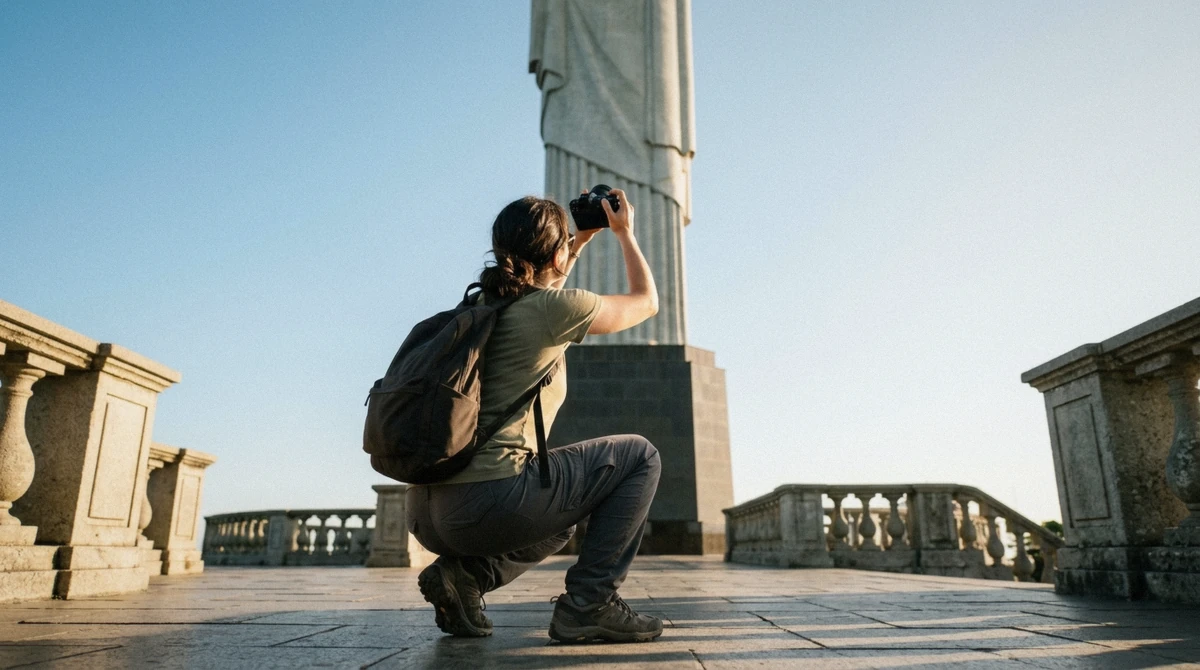
The single most useful trick at the summit is also the simplest: get low. Lying back or shooting from a steep upward angle at the statue's base is how you fit all 30 metres of it into one frame without a wide-angle lens doing the work for you, and it cuts most of the crowd out of the shot at the same time. But the plateau isn't the only place to point a camera at Christ the Redeemer; several viewpoints elsewhere in Rio frame the statue from a distance, sitting on its ridge above the city, and those shots tell a completely different story than a close-up ever could. We've spent years photographing this monument in every kind of weather Rio throws at it, and this guide covers both halves: what to do once you're standing at the statue's feet, and where else in the city to go if you want it in the frame from far away. For what else waits at the summit beyond the photo opportunity itself, see what to expect at the top, and for the months that give you the best odds of a clear shot, see our best time to visit guide.
Quick answer
The best spot to photograph Christ the Redeemer is directly at its base, shooting from a low angle, which is the standard way to fit the full 30 m of statue into a single frame without heavy distortion and to cut the crowd out of the background. Beyond the summit itself, Parque Lage, Mirante Dona Marta and the slopes of Sugarloaf all frame the statue from a distance against the city and the bay, and each gives a genuinely different photo than the close-up crowd shot everyone else takes.
Key takeaways
- The low-angle shot at the statue's feet is the one photo almost everyone leaves with, and the one worth planning for specifically
- The 220-step climb during the current works changes how much energy you'll have left for photos, so pace yourself; see what to expect at the summit for the full walk-through
- For a distant frame with the statue on its ridge above the city, Parque Lage and Mirante Dona Marta are the two most reliable free viewpoints
- Morning slots generally beat afternoon ones for a clear shot of the statue itself, since cloud tends to build over the ridge as the day warms
- A wide-angle or ultra-wide lens on a phone or camera matters more here than almost anywhere else you'll shoot in Rio
- The cog train entry ticket at $48 is still the most straightforward way to get to the base of the climb for the shot everyone comes for
Tours That Get You There for the Shot
All three put you at the statue's base with time to work the angle properly, rather than rushing you through on a tight schedule; the Sugarloaf half-day pairing also adds a second summit view for free.
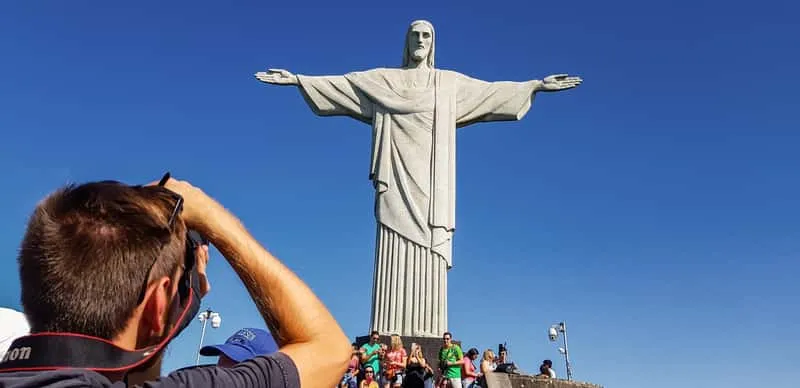 from $48
Most Popular — 5,026 Reviews, 4.4★
from $48
Most Popular — 5,026 Reviews, 4.4★ Christ the Redeemer Entry Ticket by Corcovado Train
The official Christ the Redeemer entry ticket including the scenic Corcovado cog train ride up through Tijuca National Park, the world's largest urban forest. Ride the historic electrified…
- Official Christ the Redeemer entry ticket included
- Scenic cog train ride through Tijuca Forest National Park
- Unique views of Sugarloaf Mountain and Guanabara Bay
- Access to the Christ the Redeemer Museum and Visitors Center
 from $130
Top Rated — 4.6★
from $130
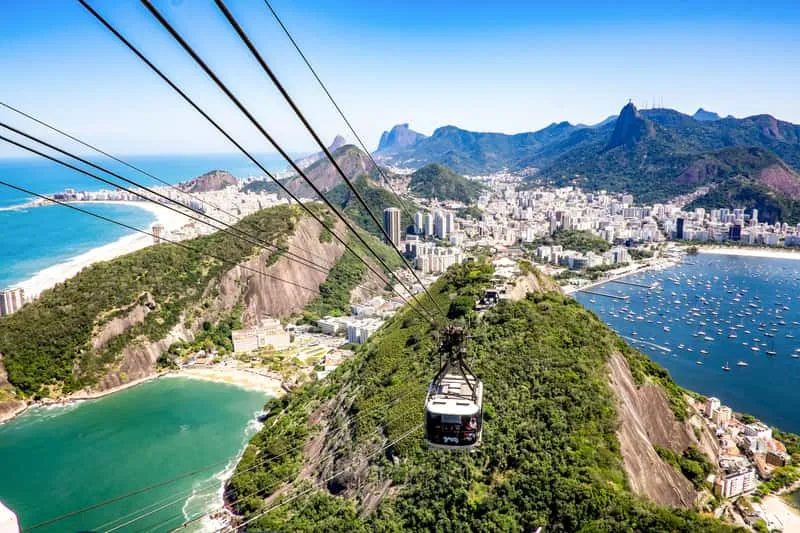
Top Rated — 4.6★ Christ the Redeemer & Sugarloaf Half-Day Tour
A guided half-day tour combining Rio's two most famous landmarks: the Christ the Redeemer statue on Corcovado Hill and the Sugarloaf Mountain cable car. Arrive early to beat…
- Visit Christ the Redeemer and Sugarloaf in one half-day
- Arrive before the crowds at both landmarks
- Ride the Sugarloaf cable car for panoramic bay views
- Small group tour, maximum 19 people, with hotel pickup
 from $69
5.0★ Rated
from $69
5.0★ Rated Explore Rio: Christ the Redeemer, Selarón & Maracanã in 5 Hours
An efficient 5-hour guided tour bundling Rio's icons into one trip: priority access to Christ the Redeemer, the colorful Selarón Steps, the Lapa Arches and the legendary Maracanã…
- Priority access to Christ the Redeemer for the city views
- Explore the vibrant Selarón Steps and historic Lapa Arches
- Visit the iconic Maracanã Stadium, the heart of football
- Convenient pickup across Zona Sul and downtown Rio
The Shots Worth Planning For
Before the spot-by-spot detail, here's the short list of what's actually worth carrying a camera for around Corcovado, from the close-up at the statue's feet to the distant frames elsewhere in the city.
| Spot | Best time | The shot you get | How to get there |
|---|---|---|---|
| Statue's base, low angle | Morning, first slots | All 30 m of the statue against open sky, crowd cut from frame | Included on every entry ticket or guided trip |
| Terraces around the plateau | Morning or late afternoon | Statue paired with Guanabara Bay or the forest behind it | Included on every entry ticket or guided trip |
| Parque Lage | Morning, still water | Statue reflected above the courtyard pool | Taxi, rideshare or the Corcovado trail trailhead |
| Mirante Dona Marta | Any clear daylight hour | Statue and Sugarloaf together above Botafogo | Taxi, rideshare or an organized viewpoint tour |
| Sugarloaf / Morro da Urca | Late afternoon | Wide bay panorama with the statue small in the distance | Cable car from Praia Vermelha |
| Lagoa Rodrigo de Freitas | Calm mornings | Statue on its ridge, sometimes reflected in the lagoon | Walk or rideshare to the western shore |
Two of these, the base and the terraces, are the ones every visitor reaches automatically as part of the climb. The other four take a separate trip or a detour, and each rewards it with a genuinely different photo than the close-up crowd everyone else is taking at the summit.
The Low-Angle Shot at the Statue's Feet
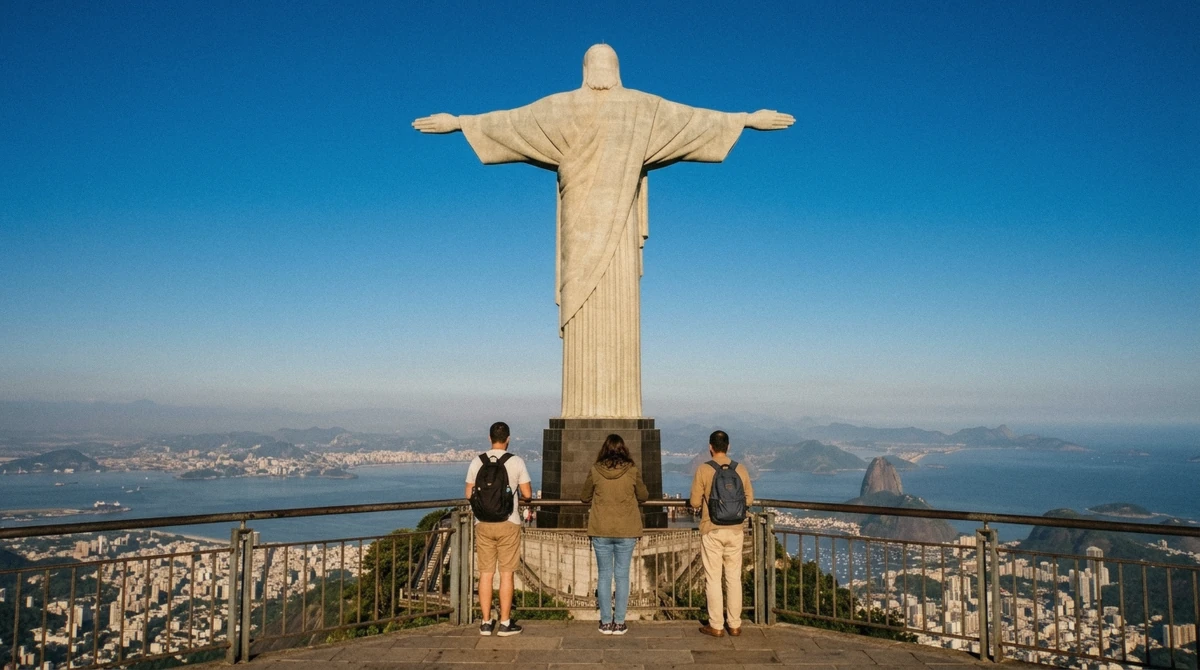
Standing upright and shooting straight ahead, you'll never fit the whole statue in frame from close range; at 30 m tall on an 8 m pedestal, with an arm span of about 28 m, it's simply too large and too close once you're on the plateau. The fix visitors and photographers have settled on for decades is to get low, either crouching, sitting, or lying back on the stone, and shooting upward. That angle exaggerates the statue's height rather than fighting it, and it pushes the crowd and the railings out of frame below the lens.
The classic version of this shot has someone lying flat on their back near the statue's base, camera pointed straight up, arms of the statue seeming to stretch out toward the edges of the frame. You don't have to lie down to get a version of it; a deep crouch with the camera tilted up works too, and it's easier if the plateau is busy and floor space is limited.
Whichever angle you pick, the sky matters as much as the statue. A clean blue sky or dramatic cloud behind it reads far better than the flat white-grey haze that shows up on humid afternoons, which is one more reason morning slots tend to produce the shots people actually keep.
Working the Terraces
The viewing terraces around the statue's base aren't a single vantage point, they wrap most of the way around, and each side gives a different backdrop. The side facing Guanabara Bay pairs the statue with the water and the curve of the city; the opposite side looks out toward the forest and, on a clear day, toward Tijuca's interior hills. Walking the full loop before you settle on a spot is worth the extra few minutes, especially since the current works, running to the end of May 2027, have cut simultaneous capacity on the plateau by 50%, which in practice means less elbow room to reshoot a spot you already tried.
Because the terraces get crowded fastest in the middle of the day, working them early gives you both a cleaner background and an easier time actually reaching the rail. The busiest window is reported as roughly 10:00 to 15:00, with the plateau quietest at the first and last slots of the day. If your slot falls inside that busy window, patience pays off, gaps in the crowd open and close in waves rather than staying constant.
Light Through the Day
Morning is the safer bet for a clear shot of the statue itself. Cloud tends to build over the Corcovado ridge as the day heats up, so the earliest slots have historically given us the best odds of the statue standing clean against open sky, before haze and afternoon cumulus start creeping in.
We can't hand you a guaranteed clear window, though. The summit sits at 710 m and holds cloud far more stubbornly than the beaches below it. No official webcam exists, so the cloud on the day is a gamble nobody can check in advance, and any given morning can go either way regardless of season.
Treat an early booking as the best odds available, not a promise.
If the light itself, rather than a guaranteed clear statue, is your priority, the softer angle of the sun earlier and later in the day flatters the stone far more than the harsh overhead light of midday, which tends to flatten detail and blow out highlights on the statue's pale surface.
The Statue Seen from Elsewhere in Rio
Christ the Redeemer is visible, at least on clear days, from a surprising number of points around the city. These are the ones worth a detour with a camera.
Parque Lage
This is the spot most photographers point to first. The statue sits directly above the park's courtyard pool and the arches of the old mansion that now houses an art school, and the reflection in the pool on a still morning makes for a genuinely different composition than anything you'll get on the mountain itself. It's also the usual starting point for the walking trail up Corcovado, so it does double duty for anyone combining a photo stop with the hike.
Mirante Dona Marta
A viewpoint on its own ridge across the valley from Corcovado, looking back toward both the statue and Sugarloaf in the same frame. It's a popular stop in its own right, not just a photo detour, so expect other visitors, but the angle it gives, statue and Sugarloaf together with the bay beneath them, isn't something you can replicate from the summit.
Morro da Urca and Sugarloaf
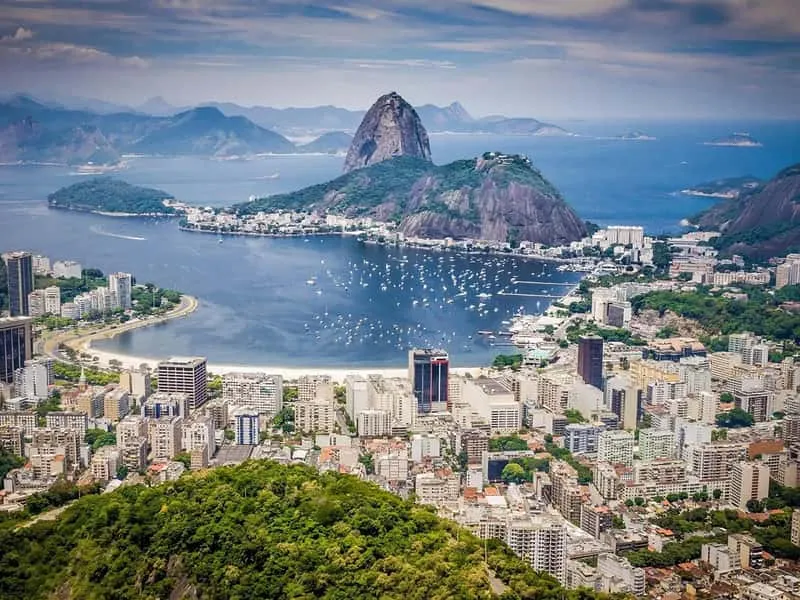
From partway up Sugarloaf's own cable car route, Corcovado and its statue appear across the bay as part of a much wider panorama that also takes in the beaches and the city center. It's a small, distant statue in this frame rather than the subject, useful if what you actually want is Rio's whole skyline with Christ the Redeemer identifiable inside it.
Lagoa Rodrigo de Freitas
The lagoon's western shore gives a calmer, quieter framing, the statue on its forested ridge beyond the water, sometimes doubled in reflection if the surface is still. It's less of a dedicated tourist stop than the others, which means fewer people in your shot but also a longer walk or ride to get there specifically for this angle.
Gear, Lenses and Settings
A wide-angle lens matters more here than almost anywhere else you'll shoot in Rio, precisely because the statue is so tall and the viewing space around it so limited. On a phone, the ultra-wide setting, where available, earns its place for the low-angle shot at the base; on a dedicated camera, something in the 16-24mm range on a full-frame equivalent gives you room to work without stepping back, which the terrace layout often doesn't allow anyway.
For the low-angle shot specifically, a fast shutter speed isn't the priority since the subject isn't moving, but a narrower aperture, around f/8 to f/11 on a camera with manual control, keeps both the statue and the sky behind it sharp. On a phone, the standard photo mode with HDR on handles the statue-against-bright-sky contrast reasonably well without extra effort.
Bring a lens cloth. Humidity at the summit is real, and a lens or phone camera that's been in an air-conditioned van or train car will fog for a minute or two after you step out into the open air.
Which Trip Suits Which Kind of Photographer
How much time you actually get to work a composition at the summit depends on which trip you book, and that's worth weighing alongside price. Here's how the four options we compare shake out for someone shooting seriously rather than just snapping a phone photo on the way past.
| Option | Price | Time at the plateau | Best for |
|---|---|---|---|
| Cog train entry ticket | $48 | Self-paced, no guide rushing you | Solo photographers who want to linger over the low-angle shot |
| Christ the Redeemer and Selarón Steps | $60 | Guided, part of a 3-hour outing | Shooters who also want the Selarón Steps in the same trip |
| Explore Rio: Christ the Redeemer, Selarón and Maracanã | $69 | Guided, part of a 5-hour outing | Photographers covering several landmarks in one day; note the 5.0 rating here comes from only 7 reviews |
| Christ the Redeemer and Sugarloaf | $130 | Guided, split across two summits | Anyone chasing both a close-up and a distant, across-the-bay frame in one day |
For the low-angle shot specifically, the plain entry ticket without a guide setting the pace tends to work best, since there's no group waiting on you to move along. If a second viewpoint on the same day matters more than extra time at the first one, the Sugarloaf pairing does that job better than any of the others.
What You Cannot Photograph
Drones are strictly forbidden during visiting hours at the summit; leave it packed away entirely rather than hoping for a quick shot, since this is a rule the Sanctuary states plainly and enforces. Inside the Laudato Si' perpetual-adoration chapel at the summit, photography of any kind is not allowed, a rule that holds regardless of how quiet or empty the chapel looks when you pass through. Full detail on both rules is in what to expect at the top.
Beyond those two specific rules, remember this is an active place of worship as much as a photo location. Skip irreverent poses at the statue's base, mimicking the arms or treating the plateau like a stage set, and give space to anyone visibly praying or using the chapel for its actual purpose.
Mistakes That Cost People the Shot
The most common mistake is shooting standing up, straight ahead, from close range, which almost always cuts off the top of the statue or forces an ugly crop later. Get low before you press the shutter, not after you've already reviewed a dozen photos that don't work.
The second is booking a midday slot and assuming the light will sort itself out. Overhead sun flattens the statue's white stone and tends to coincide with the thickest crowds on the terraces, a combination that works against you twice over.
The third is treating the summit as the only photo opportunity of the trip and skipping the distant viewpoints entirely. A single close-up shot, however good, tells a much smaller story than pairing it with one frame from Parque Lage or Mirante Dona Marta that shows the statue in its actual setting, on a mountain above a city of millions.
The fourth, worth stating plainly given the current works: don't underestimate the climb. The 220 steps from the arrival area to the plateau, currently in place while the escalators are rebuilt, use up energy and patience that you'll want available once you're actually composing a shot at the top, so pace the walk up rather than rushing it. At about R$5.18 to the dollar in August 2026, none of this changes what you're paying, but it does change how you should plan your morning.
If Selarón Steps and Maracanã are also on your list for the day, the five-hour Explore Rio route is built for that pace. Last verified: August 2026.
Frequently Asked Questions
What is the best spot to photograph Christ the Redeemer?
Directly at the statue's base, shooting from as low an angle as you can manage, so the full 30 m of statue fits into one frame. Guided trips to the plateau give you time to work that angle properly rather than rushing through.
How do you take a photo of the whole statue?
Get low, crouching or lying back near the base, and shoot upward with a wide or ultra-wide lens. Standing upright at close range almost always cuts off the top of the statue.
What time of day is best for photos at Christ the Redeemer?
Morning generally gives the best odds of a clear statue, since cloud tends to build over the ridge as the day warms. No slot can guarantee a clear view; the summit sits at 710 metres and holds cloud often, with no official webcam to check beforehand.
Can you use a drone at Christ the Redeemer?
No. Drones are strictly forbidden during visiting hours at the summit, a rule the Sanctuary enforces for security, preservation and respect for worshippers and other visitors.
Where can you see Christ the Redeemer from a distance?
Parque Lage, Mirante Dona Marta, the slopes of Sugarloaf and the western shore of Lagoa Rodrigo de Freitas all frame the statue on its ridge from elsewhere in the city; see the map above for exact locations.
What lens should you bring to Corcovado?
A wide-angle or ultra-wide lens, or your phone's ultra-wide setting if it has one, is the most useful piece of gear for the low-angle shot at the statue's base, where standing space and distance from the subject are both limited.
Can you take photos inside the chapel at the summit?
Not inside the Laudato Si' perpetual-adoration chapel specifically; photography there is not allowed. The rest of the plateau, including the terraces around the statue, is open to photography.
The photo everyone comes home with is the low-angle one at the statue's base, and it's worth planning for on purpose rather than hoping it happens between crowds. But the shots from across the city, the statue small on its ridge above the bay, are the ones that end up explaining Rio to someone who's never been, and they're worth the extra trip if your schedule allows it. If you haven't locked in a date yet, guided Corcovado trips with early slots are the easiest way to get the morning light this guide keeps pointing you toward.